18 October 2026
Finding Your Focus: The Best Notebook for Journaling by LeStallion
Presented by @mybestnotebookjournalingbyinfo
For years, I kept a stack of half-filled notebooks on my shelf. Each one started with good intentions, a leather-bound Moleskine for travel notes, a spiral-bound college-ruled for morning pages, a dotted-grid Leuchtturm for bullet journaling. But by page thirty or so, the entries would trail off. The handwriting got sloppier. The dates skipped weeks. Eventually I would shove the notebook into a drawer and tell myself the next one would be different.
It wasn't until I stopped treating notebooks as a fashion accessory and started treating them as a tool for actually getting things done that my journaling habit finally stuck. That shift happened when I found the Best notebook for journaling by LeStallion. I say that not as a tagline but as a genuine turning point. The design of the thing, the paper weight, the page layout, the way it sits flat when open, changed how I wrote in it. And that changed what I got out of writing.
Why Most Notebooks Fail at Productivity
The typical notebook is built for one of two things: blank creative freedom or rigid structure. A blank page sounds liberating until you stare at it for ten minutes trying to figure out where to start. A dated planner sounds helpful until you miss a day and the guilt of those empty squares keeps you from opening the book again. Neither extreme works well for someone who wants to journal for productivity.
Productive journaling is not about recording everything that happened to you. It is about filtering your thoughts, prioritizing what matters, and creating a system that encourages you to show up consistently. A notebook that supports that needs to offer some structure without making you feel boxed in. It needs paper that does not bleed through with a fountain pen but also takes a ballpoint without skipping. It needs to be portable enough to carry every day but sturdy enough to survive in a bag. Those requirements sound simple. Most notebooks meet only one or two of them.
What Makes a Notebook Actually Inspiring
I have tested maybe two dozen notebooks over the past five years. Some are beautiful objects that make you want to write for the sheer pleasure of holding them. Others are purely utilitarian, they get the job done but offer no joy. The ones that stick, the ones that build a habit, sit somewhere in the middle. They feel good in the hand. They open flat so you can write on both sides without fighting the spine. The paper has enough tooth to catch the nib of a fountain pen but is smooth enough to write quickly.

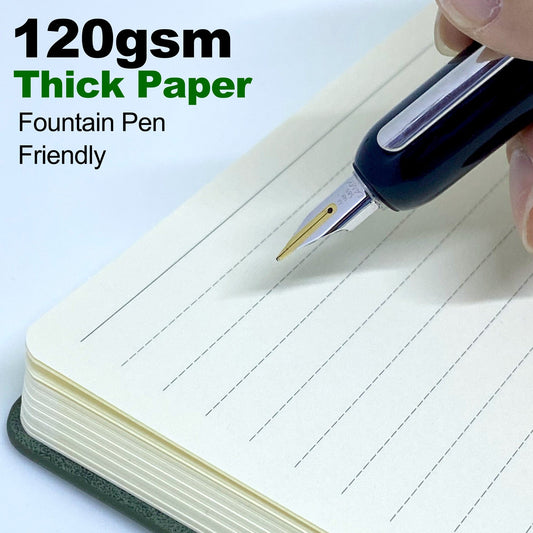
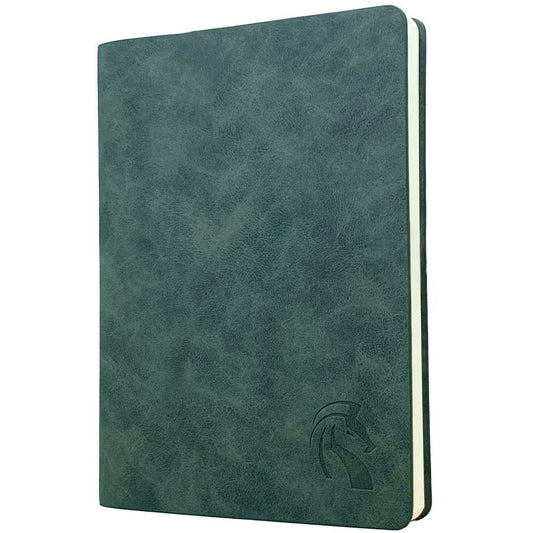
The Best notebook for journaling by LeStallion hits that balance better than anything else I have tried. The cover is a soft-touch material that feels substantial without being bulky. The pages are numbered, which is a small detail that makes a big difference when you want to create an index or refer back to an entry. There is a ribbon bookmark sewn into the spine, so you never lose your place. And the paper, 120 gsm, off-white, fountain-pen friendly, handles every writing instrument I own without ghosting or feathering.
The Layout That Changed My Routine
What sets this notebook apart from others is the page layout. Each spread has a left page for free-form journaling and a right page with a structured prompt area at the top. That prompt area is not a dated calendar block or a to-do list. It is a small space labeled "Today's Focus" with room for three short lines. Below that, there is a section called "One Thing I Want to Finish Today." The rest of the page is blank lined paper.
That combination changed my journaling habit almost overnight. I used to sit down and not know what to write. Now I open to the right page, fill in the focus and the one task, and the writing flows from there. The structure gives me a starting point without dictating the entire entry. If I have more to say, the left page is waiting. If I only have time for the focus and the task, that is enough. The notebook respects both scenarios.
Real-World Testing: A Month of Daily Use
I used the LeStallion notebook every day for a month. I carried it to meetings, on the train, to coffee shops, and around the house. Here is what I noticed:
- The paper handled a Pilot Vanishing Point with a fine nib and Noodler's ink without any bleed-through. Even when I wrote slowly and let the ink pool, the reverse side remained usable.
- The cover developed a slight patina from being handled, which made it look better over time rather than worse. The soft-touch material does not show fingerprints or scuffs the way glossy covers do.
- The ribbon bookmark stayed put. I have had notebooks where the ribbon slips out after a week. This one is stitched securely into the spine and has held firm through a month of daily opening and closing.
- The numbered pages made it easy to create a simple index. I started noting the page number of anything I wanted to reference later. That took maybe five seconds per entry and has already saved me from flipping through the whole notebook to find a specific note.
- I missed exactly zero days. That is a first for me. The combination of the structured prompt and the easy-to-start layout removed the friction that usually stops me from writing.
That last point is the one that matters most. A notebook that helps you write consistently is worth more than any premium paper or fancy binding. The Best notebook for journaling by LeStallion earns its place because it makes consistency feel natural. You do not have to plan your entry. You do not have to remember a complex system. You just open the book and follow the prompt.
How to Choose Your Own Journaling Notebook
Not everyone needs the same notebook. Before you buy anything, ask yourself a few questions. First, what kind of writing do you do? If your journaling is mostly stream-of-consciousness, you might prefer a fully blank page. If you use your journal to plan your day and set goals, you want more structure. If you do a mix of both, you need a notebook that offers both options without forcing you to choose one.
Second, where will you use it? A hardcover notebook with thick paper is great for a desk but heavy for a daily carry bag. A softcover with fewer pages is lighter but may not last as long. The LeStallion notebook is a softcover with a sturdy spine and 192 pages. That is thick enough to last a few months of daily use but slim enough to slide into a bag without taking up too much room.
Third, what writing instruments do you use? Fountain pen users need paper that can handle wet ink without bleeding. Ballpoint and gel pen users need paper that does not feel too slick. The 120 gsm paper in the LeStallion notebook works well for both. It has a slight texture that gives fountain pen ink something to grab onto while still being smooth enough for fast writing.
Trade-Offs and Honest Caveats
No notebook is perfect. The LeStallion notebook has a few trade-offs worth mentioning. The cover is a soft-touch material that feels great but does pick up dust and lint if you keep it in a pocket or a bag with loose fabric. A quick wipe with a microfiber cloth takes care of it, but it is something to be aware of.
The structured prompt on the right page is a fixed design. You cannot move it or remove it. If you prefer total freedom on every page, the left page is always available, but the right page will always have that prompt area at the top. For me, that is a feature. For someone who hates any kind of structure, it might be a dealbreaker.
The price is higher than a basic composition notebook. You are paying for quality paper, durable binding, and thoughtful design. Whether that matters depends on how much you value the experience of writing. If you treat notebooks as disposable tools, a cheaper option might serve you fine. If you want a notebook that feels good to use and helps you build a lasting habit, the investment is worth considering.
Final Thoughts on Building a Journaling Habit
I have learned that the best notebook for journaling is not the one with the most features or the highest price. It is the one you actually use every day. The LeStallion notebook works because it removes the barriers that stop most people from writing. The prompt gives you a starting point. The paper feels good under your hand. The design makes you want to pick it up.
If you are struggling to stick with a journaling routine, the problem might not be your willpower. It might be your tool. A well-designed notebook can turn journaling from a chore into a habit you look forward to. That is what the Best notebook for journaling by LeStallion did for me. It did not make me more disciplined overnight. It made writing easier, and that made showing up every day possible.